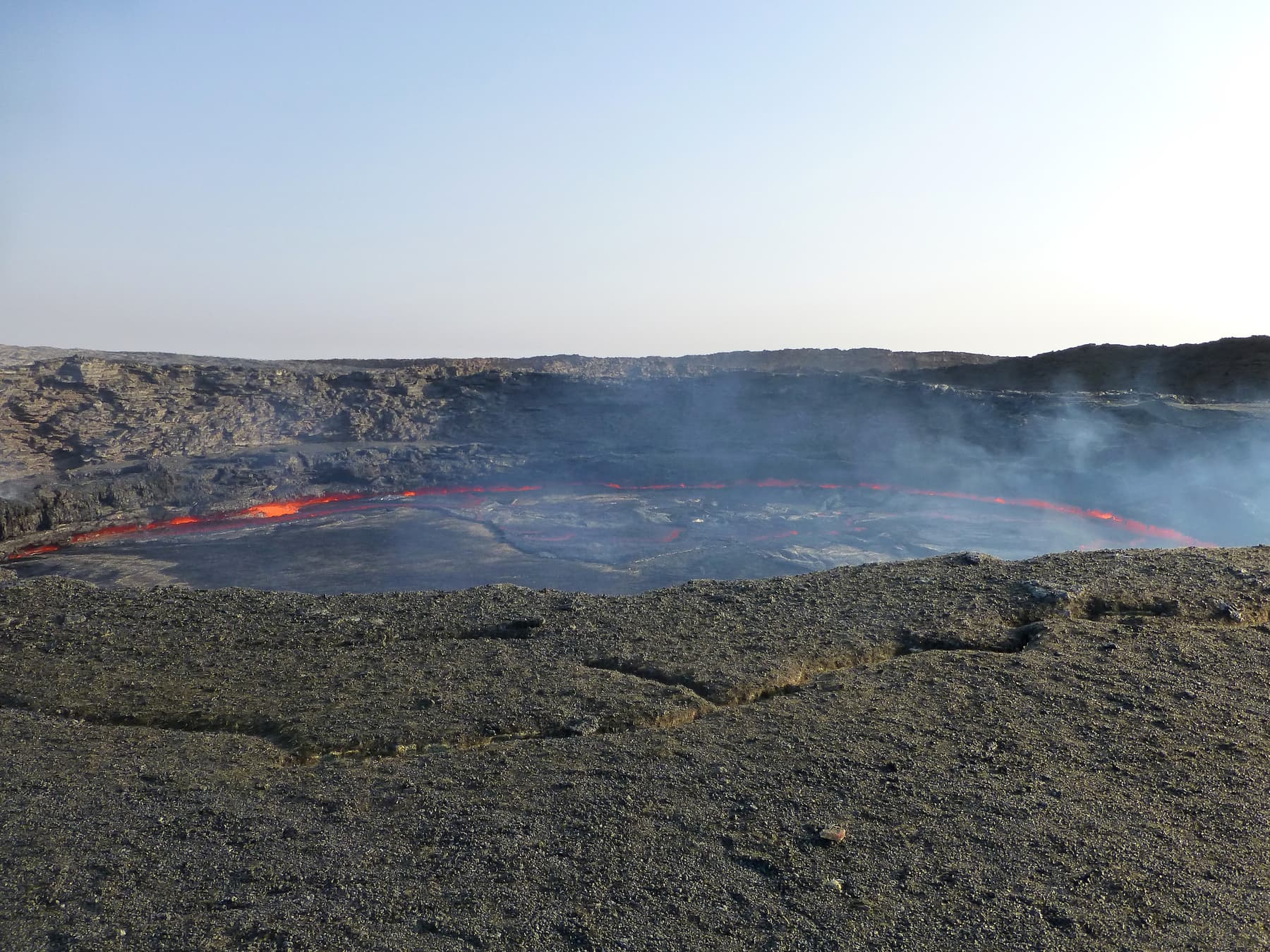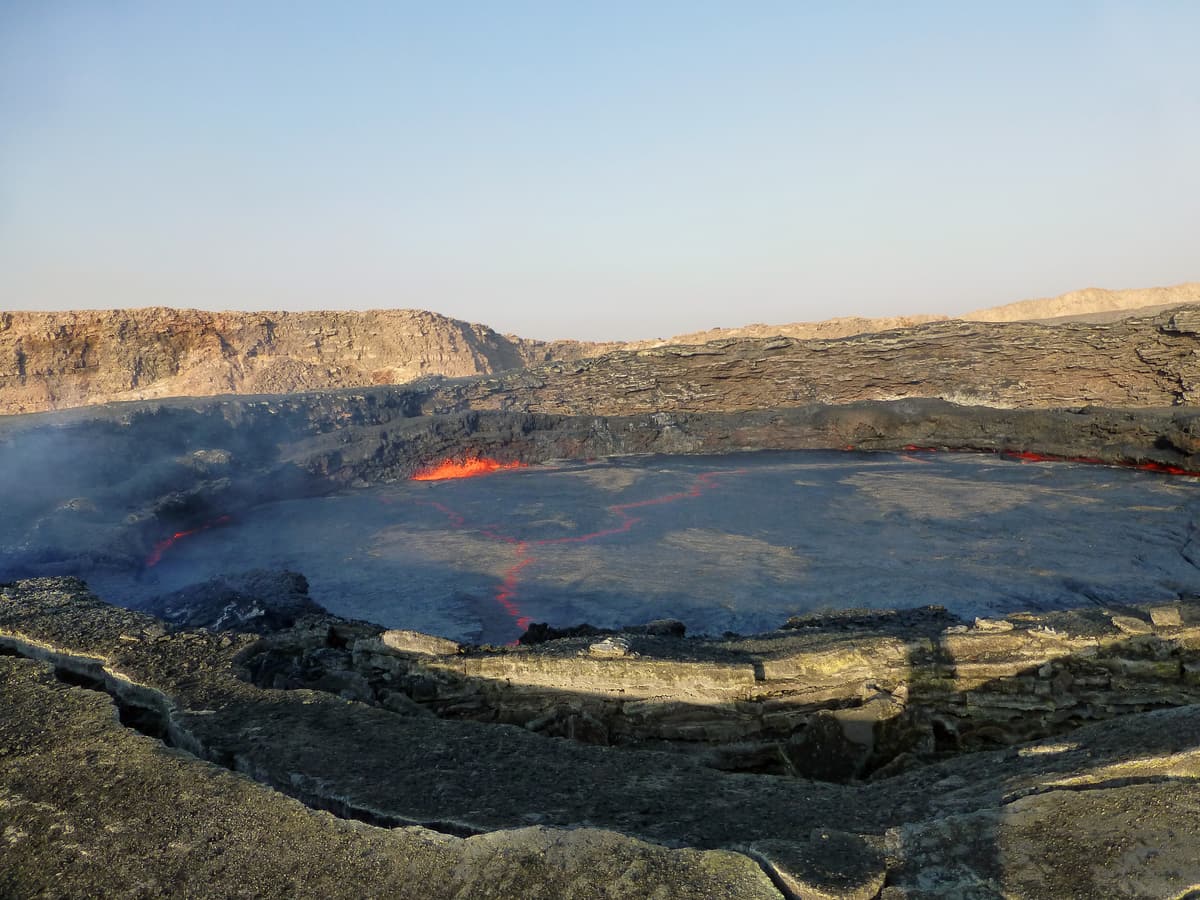
The short answer: November to March. That is the Danakil’s “cool” season, when daytime temperatures in the lowlands sit mostly in the 30s °C and the night trek to the crater rim is genuinely pleasant. From May to September the heat is extreme — often above 45 °C — and many operators run far fewer departures.
Because the hike happens at night, Erta Ale itself is feasible for more of the year than the rest of the Danakil. It is the daytime sights — Dallol and the salt flats — and the long drives in un-air-conditioned heat that make summer so hard.
Month by month
| Months | Daytime heat (lowlands) | Conditions | Verdict |
|---|---|---|---|
| Nov – Feb | About 30–38 °C | Coolest nights, clear skies, busiest season | Best time |
| March | About 35–40 °C | Warming up, still good | Very good |
| April – May | About 38–45 °C | Hot and hazy; fewer groups | Possible, tough |
| June – Aug | Often 45 °C+ | Extreme heat, dust storms; highland rains | Avoid unless experienced |
| Sept – Oct | About 40–45 °C | Heat easing; season restarting | Possible late in October |
November to February: the best season
This is peak season for a reason. Nights on the crater rim are warm but comfortable, mornings at Dallol are bearable, and the salt caravans are most active. December and January are the busiest months, especially around Christmas and Ethiopian Christmas (Genna, on 7 January) — book tours and Mekele hotels early.
March: shoulder season
Temperatures climb through the month, but conditions remain good and groups thin out after February. A sensible choice if you want fewer people.
April to October: the hot season
From April the heat builds quickly, and from June to August the lowlands are among the hottest places on Earth. Some operators still run tours, but the drives, the salt flats and Dallol can be dangerous in this heat, and dust storms reduce visibility. If you must travel, choose a short itinerary focused on the night at Erta Ale, and follow your operator’s advice.
Ethiopian holidays and festivals
Ethiopia uses its own calendar. Major holidays include Enkutatash (Ethiopian New Year, 11 September, 12 September in some years), Meskel (late September) and Timkat (Epiphany, 19 or 20 January). They are wonderful to experience in the highlands, but flights and hotels fill up — plan ahead if your Danakil trip coincides.
What about the volcano’s activity?
Erta Ale’s activity has nothing to do with the season. The level of the lava lake changes over months and years, not with the weather — so whenever you go, ask your operator what recent groups have seen.